
XSL Formatting Objects Developer's Handbook is a syntactical reference and a guide for developing practical solutions using the complete XSL toolkit. In exploring the available tools and architectures, the book allows programmers to understand and apply XSL as practitioners. XSL-FO is a complex specification that provides a framework for describing detailed document formatting characteristics. A primary goal of XML is to separate the data from presentation. Unlike HTML documents, XML documents contain no information about how those documnets will appear when displayed. The XSL-FO specification provides a standardized way to build stylesheets that express document formatting in pure XML notation. 
More Java developers today want to work with XML, the technology that enables data to be transported intact over the Internet, but they don't have time to become XML experts. If this describes you, then you'll appreciate data binding, the new way of converting XML documents into Java objects, so those documents can be worked on and manipulated like any other Java object, then converted back to XML This new title provides an in-depth technical look at XML Data Binding. The book offers complete documentation of all features in both the Sun Microsystems JAXB API and popular open source alternative implementations (Enhydra Zeus, Exolabs Castor and Quick). It also gets into significant detail about when data binding is appropriate to use, and provides numerous practical examples of using data binding in applications. 
Java and XML share many features that are ideal for building web-based enterprise applications, such as platform-independence, extensibility, reusability, and global language (Unicode) support, and both are based on industry standards. Together Java and XML allow enterprises to simplify and lower costs of information sharing and data exchange. Java and XML shows how to put the two together, building real-world applications in which both the code and the data are truly portable. This book covers:The basics of XMLUsing standard Java APIs to parse XMLDesigning new document types using DTDs and SchemasWriting programs that generate XML dataTransforming XML into different forms using XSL transformations (XSL/T)XML-RPCUsing a web publishing framework like Apache-CocoonXML as a configuration language 
This book is a thorough introduction to Java Message Service (JMS), the standard Java application program interface (API) from Sun Microsystems that supports the formal communication known as "messaging" between networked computers. JMS provides a common interface to standard messaging protocols and to special messaging services in support of Java programs. Messaging involves crucial data exchange between computers, and is often used to coordinate programs in dissimilar systems or different programming languages. Using the JMS interface, a programmer can invoke the messaging services of IBM's MQSeries, Progress Software's SonicMQ, and other popular messaging product vendors. JMS also supports messages that contain serialized Java objects or Extensible Markup Language (XML) pages. Java Message Service shows how to build applications using the point-to-point and publish-and-subscribe models; use features like transactions and durable subscriptions to make an application reliable; and use messaging within Enterprise JavaBeans. It introduces a new EJB type, the MessageDrivenBean, that is part of EJB 2.0, and discusses integration of messaging into J2EE. 
This Java 1.1 programming book shows you how to take full advantage of Java's thread facilities: where to use threads to increase efficiency, how to use them effectively, and how to avoid common mistakes. It thoroughly covers the Thread and ThreadGroup classes, the Runnable interface, and the language's synchronized operator, as well as problems like deadlock, race condition, and starvation to help you write code without hidden bugs. In addition, Java Threads shows you how to extend Java's thread primitives. A thorough discussion of thread scheduling concludes by developing a CPUSchedule class that shows you how to implement your own scheduling policy. Other extended examples include classes that implement reader/writer locks, general locks, locks at arbitrary scope, and asynchronous I/O. In short, Java Threads covers everything you need to know about threads, from the simplest animation applet to the most complex applications. If you plan to do any serious work in Java, you will find this book invaluable. Examples available online. 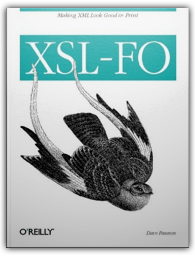
No matter how flexible and convenient digital information has become, we haven't done away with the need to see information in print. Extensible Style Language-Formatting Objects, or XSL-FO, is a set of tools developers and web designers use to describe page printouts of their XML (including XHTML) documents. XSL-FO is one of the few books to go beyond a basic introduction to the technology. While many books touch on XSL-FO in their treatment of XSLT, this book offers in-depth coverage of XSL-FO's features and strengths. Author Dave Pawson is well known in the XSLT and XSL-FO communities, and maintains the XSLT FAQ. XSL-FO is more than just a guide to the technology; the book teaches you how to think about the formatting of your documents and guides you through the questions you'll need to ask to ensure that your printed documents meet the same high standards as your computer-generated content. Written for experienced XML developers and web designers, no other book contains as much useful information on this practical technology. 
Ajax, the popular term for Asynchronous JavaScript and XML, is one of the most important combinations of technologies for web developers to know these days. With its rich grouping of technologies, Ajax developers can create interactive web applications with XML-based web services, using JavaScript in the browser to process the web server response. |
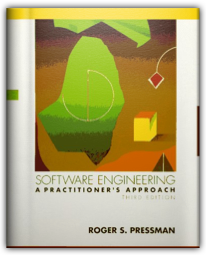
The best selling guide to both practitioners and students of software development. This new edition has been restructured to accommodate the dramatic growth in the field and to emphasize new and important software engineering methods and tools. Restructured organization divides the 24 chapters of the third edition into five manageable parts to enable an instructor to "cluster" topics. Included is a "System of Instruction" including text, 10 videos on CASE (computer-aided software engineering), transparency masters (200) and special arrangement with vendor-provided CASE tools. Also included are three new chapters on software metrics, estimation and project plannng replacing original chapter on software project management. Other new chapters are included on user interface design, structured analysis, and a chapter on object-oriented analysis and data modeling. The role of automation in software engineering is presented in three more new chapters on computer-aided software engineering (CASE). Many new examples, problems and points to ponder have also been added. 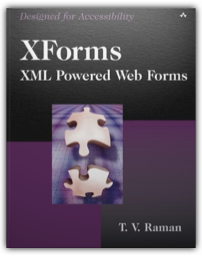
W3C XForms (XML powered web forms) is an overhaul to HTML forms from 1993. On-line forms are critical to electronic commerce on the Internet, and the HTML forms design is now beginning to show its age. The advent of XML on the WWW, and the subsequent move to Web services as a means of connecting disparate information technologies to deliver end-to-end customer solutions has now made XML documents central to the fabric of the WWW. 
Lightweight Directory Access Protocol (LDAP) is a fast-growing technology for accessing common directory information. LDAP has been embraced and implemented in most network-oriented middleware. As an open, vendor-neutral standard, LDAP provides an extendable architecture for centralized storage and management of information that needs to be available for today's distributed systems and services. 
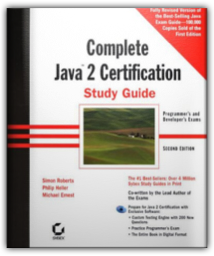
Welcome to the completely revised edition of the market-leading Java exam preparation guide from Sybex! Authors Simon Roberts (the lead author of the Java exams), Philip Heller, and Michael Ernest have completely revamped their book, writing five new chapters on the tough Developer's exam and adding lots of new questions (200 new ones in the book and on the CD). In response to reader feedback, we've cut out the long API reference that was in the previous edition and replaced it with more meaningful content. Finally, the CD now contains a fully searchable electronic edition of the book. 
The most eagerly anticipated book of the year, the grand finale of the Harry Potter series, is here. Harry must at last fulfill his destiny: to destroy the Dark Lord Voldemort or be destroyed himself. Take Harry with you everywhere you go with this audiobook, narrated by the award-winning Jim Dale. 
Applies techniques to the entire software development cycle. Presents a new object-oriented software development methodology-from analysis, through design, to implementation. DLC: 1. Object-oriented programming. |

Steven Pothoven
Collection Total:
178 Items
178 Items
Last Updated:
Nov 2, 2010
Nov 2, 2010
 Made with Delicious Library